Oct 15
Bathroom Waterproofing Newcastle NSW
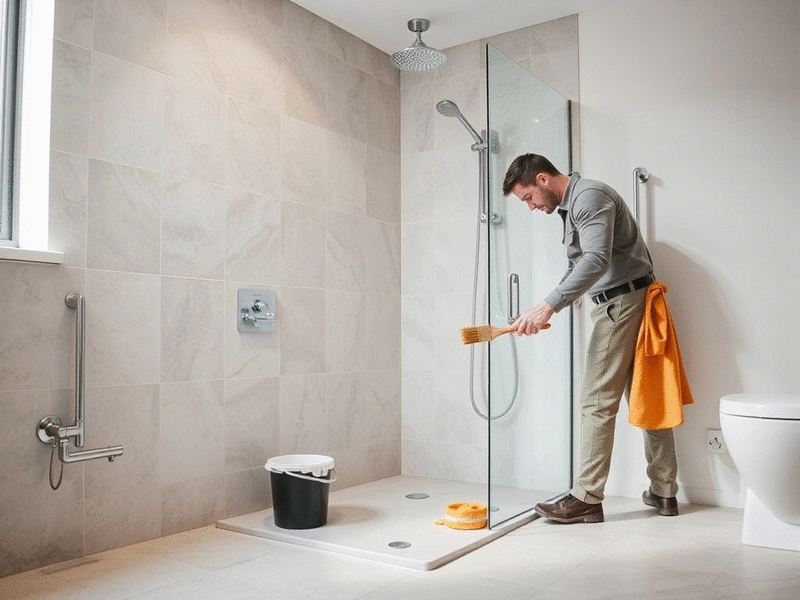
Bathroom waterproofing helps prevent water from escaping through floors, walls and vulnerable junctions into the surrounding structure. In Newcastle, a bathroom exposed to daily showers, baths and cleaning needs a suitable waterproofing system, correctly prepared surfaces and careful detailing around water outlets and penetrations. Problems can remain hidden behind tiles until moisture damage becomes noticeable, so understanding how bathroom waterproofing works is important when building, renovating or investigating a leak.
What This Guide Covers
- Why bathroom waterproofing matters and where failures commonly occur.
- How AS 3740 relates to waterproofing domestic wet areas.
- The differences between liquid-applied and sheet membranes.
- What to check when selecting a waterproofing contractor.
- Warning signs of possible waterproofing failure and when to seek an inspection.
Understanding Bathroom Waterproofing in Newcastle
Bathroom waterproofing involves creating a protective barrier in designated areas to limit water penetration into building materials and adjoining spaces. It is an important part of bathroom construction and renovation, particularly around showers, baths, floor junctions and plumbing penetrations.
Water can escape through poorly sealed junctions, damaged membranes, cracks, movement around fittings or defects in the surrounding finishes. Once moisture reaches concealed materials, it may contribute to deterioration, staining, mould growth or damage to rooms below and beside the bathroom.
Newcastle properties vary in age, construction and renovation history. The appropriate waterproofing approach therefore depends on the condition of the existing bathroom, its substrate, drainage arrangement and the scope of the work. A new bathroom installation may require a different approach from investigating a leak in an older tiled shower.
Why Is Bathroom Waterproofing Important?
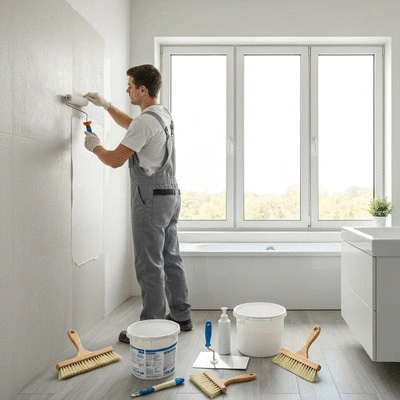
A correctly designed and installed waterproofing system helps manage moisture and protect the building materials behind bathroom finishes. Tiles and grout alone should not be treated as the waterproofing system because water can pass through joints and reach the layers underneath.
- Helps limit water damage: A suitable membrane and correctly detailed junctions reduce the risk of moisture penetrating vulnerable parts of the building.
- Helps manage mould risks: Preventing persistent moisture from accumulating in concealed areas can reduce conditions that support mould growth.
- Protects adjoining rooms: Waterproofing defects may allow water to affect nearby walls, floors, ceilings or cabinetry.
- Supports bathroom durability: Proper preparation, installation and maintenance help protect the bathroom over its service life.
Waterproofing is only one part of moisture management. Plumbing leaks, inadequate drainage, failed sealant, ventilation problems and defective fixtures can also cause water-related damage. Identifying the source of moisture is important before deciding what repair is needed.
For broader advice on managing moisture problems, see ways to prevent waterproofing issues in Newcastle.
AS 3740 and Bathroom Waterproofing Requirements
AS 3740 addresses waterproofing of domestic wet areas in buildings. Its requirements are relevant when planning bathroom construction and renovation, including the treatment of designated wet areas, junctions and penetrations. The applicable edition and requirements should be confirmed for the project, together with any relevant building approval or regulatory requirements.
Compliance is not established simply by choosing a membrane labelled for bathroom use. The substrate, surface preparation, membrane application, junction detailing, drainage and compatibility of the selected products all affect the finished system.
What Should Be Considered?
- Water exposure: Identify the areas subject to direct and indirect water exposure and determine the required waterproofing treatment.
- Substrate condition: Surfaces need to be suitable for the chosen system and prepared according to the product instructions.
- Junctions and penetrations: Corners, floor-to-wall junctions, pipes and other penetrations require appropriate detailing.
- Drainage: The floor and drainage arrangement should work with the waterproofing design to manage water effectively.
- Product requirements: Membranes, primers, sealants and associated components need to be suitable for the intended application.
- Installation records: Where relevant, retain product information, photographs and documentation of the work completed.
AS 3740 is not a guarantee that a bathroom will never leak. The standard must be applied in the context of the project, and workmanship, product compatibility, building movement and ongoing maintenance remain important.
Read more about understanding AS 3740 requirements in Newcastle or review the guidance on waterproofing compliance for wet areas.
Choosing a Bathroom Waterproofing Membrane
Liquid-applied and sheet membranes are two common approaches to bathroom waterproofing. Neither is automatically the right choice for every project. Suitability depends on the substrate, bathroom layout, water exposure, installation requirements and the manufacturer's system instructions.
Liquid-Applied Membranes
Liquid membranes are applied to prepared surfaces and form a continuous coating as they cure. Depending on the product and system, reinforcement may be required at corners, junctions or other critical areas.
- Can be useful around bathrooms with multiple corners, edges and changes in shape.
- Require the specified application method, coverage and dry-film thickness.
- May need a primer and particular drying conditions before subsequent work proceeds.
- Must be protected from damage during tiling and other construction activities.
Sheet Membranes
Sheet membranes are supplied in pre-formed rolls or sheets and installed using the specified adhesive or fixing system. Joints, overlaps, corners and penetrations need careful attention because these details form part of the waterproofing barrier.
- Provide a manufactured sheet with defined material characteristics.
- Require correctly formed joins, edges and junctions.
- Need a compatible substrate and installation method.
- Must be used in accordance with the system manufacturer's instructions.
Regardless of membrane type, the completed system depends on more than the membrane material alone. Preparation, detailing, curing, protection and compatibility with the finishes above it all matter.
Where Bathroom Waterproofing Problems Commonly Develop
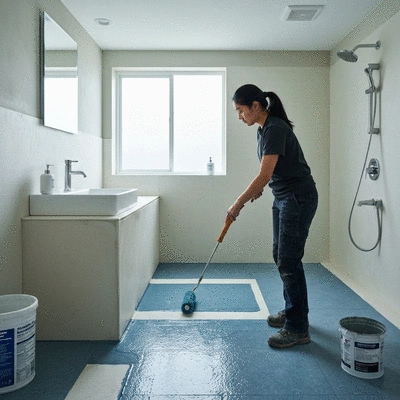
Waterproofing failures can occur in several parts of a bathroom. The visible symptom does not always identify the original source, so an assessment may need to consider plumbing, drainage, surface finishes and the concealed waterproofing system.
Shower Floors and Wall Junctions
The shower receives repeated direct water exposure. Defects around the floor-to-wall junction, drain, screen fixings or pipe penetrations may allow moisture to move beyond the intended wet area. Deteriorated grout or sealant can be a warning sign, but replacing these finishes will not necessarily resolve a failed membrane.
For more specific information, read about shower waterproofing in Newcastle.
Baths, Basins and Plumbing Penetrations
Water can escape around bath edges, taps, waste fittings and pipe penetrations if connections or seals deteriorate. A leak may originate from plumbing rather than the waterproofing membrane, so the source should be identified before repairs are selected.
Bathroom Floors and Adjoining Rooms
Staining on a ceiling below a bathroom, swollen skirting boards, peeling paint or persistent dampness near a bathroom wall can indicate a moisture problem. However, these symptoms may also result from a plumbing leak, condensation or water entering from another location.
Older Bathrooms and Renovations
When renovating an existing bathroom, the condition of the substrate and any retained waterproofing system should be assessed. Installing new tiles over an existing surface does not automatically correct defects beneath it. The required work will depend on the extent of the damage and whether the existing system can be retained appropriately.
If you suspect an existing leak, consult the guide to bathroom leak repairs in Newcastle.
How to Choose a Bathroom Waterproofing Contractor
Selecting a contractor involves more than comparing quotes. Ask how the work will be assessed, which waterproofing system is proposed and how critical installation details will be handled. Confirm the contractor's relevant qualifications, licensing requirements for the work, insurance and experience with similar projects.
Questions to Ask Before Work Begins
- What areas will be waterproofed, and what work is included in the quote?
- How will the substrate be inspected and prepared?
- Which membrane system is proposed, and is it suitable for the intended application?
- How will corners, penetrations, drains and other junctions be treated?
- What drying, curing and inspection stages must be completed before tiling?
- What documentation will be provided for the products and completed work?
- What warranty terms apply, and what exclusions or maintenance conditions should be understood?
Check credentials rather than relying on general statements about certification. Australian Standards describe technical requirements; they are not themselves personal licences or contractor certificates. The relevant licensing and qualification requirements depend on the type and scope of work and the applicable rules in New South Wales.
A written quote should clearly identify the work included, any preparation or removal required, the proposed system and any exclusions. If hidden damage is discovered after tiles or other finishes are removed, ask how additional work will be assessed and approved.
For a structured assessment, use the waterproofing inspection checklist for NSW.
Bathroom Waterproofing for New Builds and Renovations
The project stage affects how waterproofing should be planned. For a new bathroom, waterproofing needs to be coordinated with the substrate, plumbing, drainage, wall and floor finishes, and the overall construction sequence. For a renovation, existing materials may need to be removed so concealed damage and the condition of the underlying surfaces can be assessed.
Before Installation
- Confirm the areas requiring waterproofing and the intended membrane system.
- Check that surfaces are sound, clean and prepared according to the system instructions.
- Coordinate plumbing penetrations, floor wastes and other fixtures before the membrane is applied.
- Confirm the required curing times and any inspection stages before covering the membrane.
After Installation
- Protect the membrane from punctures, abrasion and damage by following the system instructions.
- Complete subsequent trades carefully so the waterproofing is not compromised.
- Retain relevant product details, installation records and inspection documentation.
- Address leaks or signs of persistent moisture promptly rather than covering them with new finishes.
Frequently Asked Questions About Bathroom Waterproofing
Why is bathroom waterproofing necessary?
Bathroom waterproofing helps limit moisture entering building materials and adjoining spaces. Without a suitable system, water may contribute to deterioration, mould growth and damage to floors, walls or ceilings.
What is AS 3740?
AS 3740 is an Australian Standard covering waterproofing of domestic wet areas in buildings. Its applicable requirements should be considered when designing and installing bathroom waterproofing, alongside relevant regulatory requirements and product instructions.
Are liquid membranes better than sheet membranes?
Not in every situation. Both can be suitable when used as part of an appropriate system. The choice depends on the substrate, layout, project requirements, product compatibility and installation method.
Can new grout fix a leaking shower?
Not necessarily. Deteriorated grout or sealant can allow water to reach underlying areas, but a leak may also involve plumbing, drainage or a failed membrane. Identifying the source is important before deciding on a repair.
How can I tell if my bathroom waterproofing has failed?
Possible warning signs include recurring damp patches, peeling paint, swollen skirting boards, staining on a ceiling below the bathroom, musty odours or persistent moisture near wet areas. These symptoms can have other causes, so further investigation may be needed.
What should a bathroom waterproofing quote include?
A useful quote should explain the areas covered, preparation and repair work, proposed waterproofing system, relevant installation stages, exclusions and applicable warranty terms. Ask how unexpected damage or additional work will be handled.
Does a waterproofing membrane mean the bathroom cannot leak?
No system can guarantee that leaks will never occur. The risk depends on design, preparation, installation, product compatibility, damage and ongoing maintenance. Waterproofing is one part of a properly coordinated bathroom construction or renovation.
Plan Your Bathroom Waterproofing Project
Whether you are building a new bathroom, renovating an existing wet area or investigating signs of moisture damage, start by identifying the project requirements and the condition of the surfaces involved. Choosing a suitable waterproofing system, addressing critical junctions and following installation instructions are important steps in protecting the surrounding structure.
For further guidance, explore our information on bathroom waterproofing in Newcastle and waterproofing wet areas in Newcastle.